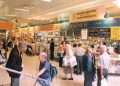

A long-awaited restoration of Burslem Market Hall is under way, with around £4 million being invested to secure one of the Mother Town’s most important historic buildings and prepare it for public use again.
The Grade II-listed hall on Queen Street has been closed since 2003, when falling masonry made the building unsafe. Stoke-on-Trent City Council announced that local contractor BSN Group would begin the main programme of work on 7 April 2026, with completion scheduled for May 2027.
For Burslem, this is more than a building repair. The market hall stood at the centre of the town’s commercial life for more than a century. Its recovery could bring activity back to Queen Street, support neighbouring heritage projects and give residents another reason to spend time in the town centre.
What the £4 million project includes
The most urgent task is the roof. According to the council, the existing roof has been judged unsafe and is being stripped back and replaced. Repairs are also planned for the brickwork, guttering and other exterior features.
Inside, the programme includes work to create a temporary events space. The council says organisations will be able to use that space in the short to medium term, opening the possibility of entertainment, leisure, hospitality, exhibitions and community events while a permanent role for the building is developed.
The approximately £4 million package is being funded by Stoke-on-Trent City Council, central government and Historic England. The council has appointed specialist firm Next Phase Projects to explore a sustainable long-term use for the hall.
That distinction matters: this project is designed to rescue the structure and make early activity possible, but it does not yet amount to a confirmed full reopening as a traditional indoor market. Residents should expect the building’s permanent future to develop alongside the physical restoration.
Why Burslem Market Hall matters
The hall was completed in 1879, when Burslem was displaying the confidence, wealth and civic ambition created by the Potteries. It was designed by E. M. Richards, engineer and surveyor to the local board. Longton builders H and R Inskip completed the brick and stonework, while Hill and Smith of Brierley Hill constructed its glazed roof.
Historic England describes the building as an early example of a large market hall using a wide-span iron roof and a patent glazing system. Its Gothic design was adapted to a tight town-centre plot, with shops facing Queen Street and the main hall behind them.
A memorial stone was laid in March 1878 containing coins and a newspaper of the day. When the market formally opened on 14 August 1879, large crowds watched a procession involving the fire and police brigades, rifle volunteers and a band. That sense of civic occasion helps explain why the building still has such a powerful place in local memory.
The market traded for well over a century before safety concerns forced its closure in 2003. It was added to the National Heritage List for England at Grade II in December 2022, recognising both its architectural quality and its role in Burslem’s history.
Part of a wider Burslem revival
The market hall scheme does not stand alone. Nearby, a separate £3.5 million programme is intended to safeguard the Grade II*-listed Wedgwood Institute, while improvement work has also been taking place at Burslem School of Art.
The council has also announced a £1.5 million package of public-realm improvements for Queen Street. Taken together, these projects could improve the setting around several of Burslem’s best-known buildings and make the route through the historic centre more attractive.
This joined-up approach is important. Restoring one landmark can prevent its loss, but regeneration only becomes visible to residents when buildings, streets, businesses and regular activities begin to reinforce one another. A repaired market hall needs a practical reason for people to visit, and those visitors need a town centre that feels welcoming and connected.
What could the hall become?
No final permanent use has been confirmed. The council says it has already received expressions of interest connected with entertainment, leisure and hospitality, and wants the hall in use as soon as possible after the building work is complete.
The building’s scale and character give it several possibilities. Markets and independent traders would connect naturally with its history. Food events, performances, exhibitions, fairs and community gatherings could help it serve a broader audience. A mixed programme may ultimately prove more resilient than relying on one type of activity alone.
However, the long-term plan will need to answer practical questions. Who will operate the venue? How often will it open? Will local groups and small businesses be able to afford the space? How will ongoing maintenance, heating, staffing and security be funded once the capital works are finished?
These are not reasons to doubt the restoration. They are the questions that determine whether a rescued heritage building becomes a busy local asset or simply a beautifully repaired structure awaiting its next plan.
What residents should watch next
The first milestone is the safe replacement of the roof and completion of the external repairs. The announced timetable points to May 2027, although work on a building of this age can uncover unexpected problems.
The second milestone will be detail about the temporary events space: when it can be used, what facilities it will contain and how organisations can express an interest.
The third—and most important for the long term—will be the business and operating plan developed with Next Phase Projects. A clear proposal should explain the intended mix of uses, who will manage the hall and how it will contribute to Burslem throughout the year.
Local people will also want to see how the market hall connects with the Wedgwood Institute, School of Art and Queen Street improvements. Coordinated opening dates, events and promotion could turn several separate investments into a recognisable heritage and cultural destination.
A significant step after more than two decades
After more than 20 years behind closed doors, physical work on Burslem Market Hall is a substantial step forward. The funding gives the building something it has urgently needed: a route away from continued deterioration and towards safe public use.
The restoration will not solve every challenge facing Burslem town centre, and it should not be presented as a finished regeneration story. But saving a landmark of this quality, bringing people back through its doors and finding it a sustainable purpose would be a meaningful achievement for the Mother Town.
For now, the promise is straightforward: repair the hall, create space that can be used, and develop a permanent future worthy of a building that has been part of Burslem since 1879.
Sources: Stoke-on-Trent City Council: Burslem Market Hall regeneration project; Historic England: Burslem Market Hall, list entry 1483420.
Featured image: “Burslem – north side of Queen Street” by Dave Bevis, via Wikimedia Commons, licensed under CC BY-SA 2.0.